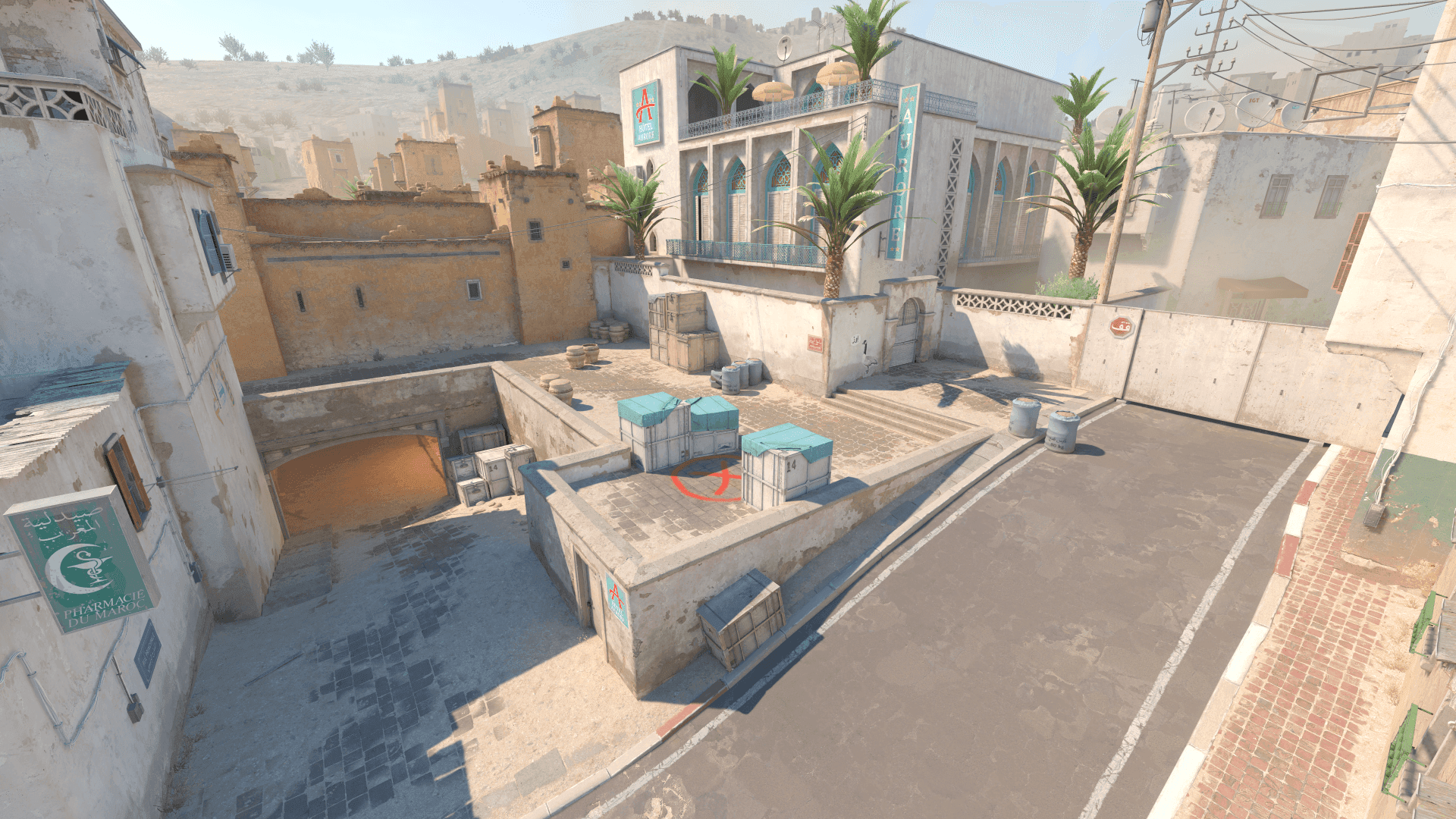
What makes a ranked crosshair reliable
A ranked crosshair has to stay readable when the round gets messy. It should be visible on common map surfaces, leave the center of the enemy model open, and avoid distracting movement.
Ranked games move between pistol duels, rifle sprays, utility fades, smoke spam, and awkward retakes, so the crosshair has to stay readable without covering the head model.
A useful ranked crosshair selection baseline should be easy to describe and easy to repeat. If you cannot explain why a value is there, treat it as temporary until testing proves it belongs.
- Visible on bright and dark map areas
- Small enough for headshot adjustments
- Simple enough to read through utility and recoil
- Write down the exact ranked crosshair selection value you are testing.
- Compare it against your previous setup before deleting the old one.
Static versus dynamic
Static crosshairs are usually better for serious ranked play because the center stays predictable. Dynamic crosshairs can still be useful while learning counter-strafing, but they should not become a visual crutch.
- Judge comfort during real round pressure, not only in a clean preview.
- If the setting creates hesitation, simplify it.
Recommended starting point
Start with a compact style 4 crosshair in green or cyan, no center dot, low or no outline, and a small negative gap. Play a full deathmatch or retake block before judging it.
- Color: green or cyan
- Style: classic static
- Dot: off unless you only want a dot crosshair
- Outline: off or very low
- Use the same routine every time you compare changes.
- Separate first impressions from results after several sessions.
How to test your crosshair
Test on pistol taps, rifle sprays, long-range jiggle peeks, and messy executes. If the crosshair disappears on certain maps, change color before changing size.
Once the baseline works, tune around the fights you lose most often. Entry players often need visibility during chaos, while lurkers may care more about clean long-range micro-adjustments.
- Keep the final version stable for at least a few play sessions.
- Review it only when you can name the problem you are solving.
Using Crosshairs for Ranked in matches
The value of ranked crosshair selection only shows up when it changes what you notice, how confidently you move, or how quickly you can commit to a fight.
- Try it in one full map session before calling it final.
- Watch whether it helps under utility, pressure, and time limits.
- Ask whether it reduces hesitation or creates another thing to manage.
- Keep notes after matches so the next tweak has a clear reason.
Crosshairs for Ranked mistakes to avoid
Most problems with ranked crosshair selection come from copying too broadly, judging too quickly, or changing several values at the same time.
- Do not judge the setting from one screenshot or one warmup map.
- Do not change multiple major settings during the same test.
- Do not copy a pro setting if it creates discomfort on your gear.
- Do not delete the old version before the new one is proven.
When to revisit Crosshairs for Ranked
Do not rebuild ranked crosshair selection every time you have a bad game. Revisit it when there is a pattern, a hardware change, a resolution change, or a CS2 update that genuinely affects how the game feels.
- Review after hardware, resolution, driver, or CS2 updates.
- Review when the same problem appears across several sessions.
- Avoid emergency changes right before serious matches.
- Archive the previous stable setup before testing the new one.
Crosshairs for Ranked checklist
Use this checklist whenever you tune ranked crosshair selection. It keeps the process repeatable and makes future changes easier to understand.
- Check the crosshair on bright walls, dark corners, smoke edges, and skybox lines.
- Use the same code for pistol, rifle, AWP shoulder peeks, and retakes.
- Avoid changing color, size, gap, and outline during the same test.
- Keep the final code saved before trying another profile.